Ethical use of AI



Artificial Intelligence
July 29, 2024 . 4 Min Read
AI Ethics
As AI rapidly progresses, it brings both benefits and ethical challenges. From its early stages to today's advanced technology, AI has changed how we live and work. But it also raises concerns about privacy, bias, accountability, and transparency. To address these issues, collaboration across fields like computer science, ethics, law, and philosophy is crucial. Clear guidelines and regulations are needed to ensure AI serves humanity's best interests. Balancing innovation with ethical responsibility is key to maximizing AI's positive impact on society.
Bias and Fairness
In the realm of artificial intelligence, one of the most pressing concerns is the presence of bias and ensuring fairness in its applications. While AI systems offer incredible potential to streamline processes and make decisions more efficiently, they are not immune to inheriting human biases or perpetuating societal inequalities.
Bias in AI can emerge in various forms, from biased training data to the algorithms themselves reflecting the prejudices of their creators. For instance, if historical data used to train an AI model contains biases, such as gender or racial discrimination, the model may inadvertently learn and replicate these biases in its decision-making processes. This can lead to unfair outcomes, reinforcing existing societal disparities and further marginalizing already vulnerable groups.
Addressing bias in AI requires a multifaceted approach. It involves not only developing technical solutions to detect and mitigate bias within algorithms but also promoting diversity and inclusivity in the teams designing and implementing AI systems. Moreover, transparency and accountability are crucial to ensuring that the decisions made by AI systems are understandable and justifiable.
Bias in AI can emerge in various forms, from biased training data to the algorithms themselves reflecting the prejudices of their creators. For instance, if historical data used to train an AI model contains biases, such as gender or racial discrimination, the model may inadvertently learn and replicate these biases in its decision-making processes. This can lead to unfair outcomes, reinforcing existing societal disparities and further marginalizing already vulnerable groups.
Addressing bias in AI requires a multifaceted approach. It involves not only developing technical solutions to detect and mitigate bias within algorithms but also promoting diversity and inclusivity in the teams designing and implementing AI systems. Moreover, transparency and accountability are crucial to ensuring that the decisions made by AI systems are understandable and justifiable.
Accountability
In the realm of AI, accountability is essential, emphasizing the responsibility of those involved in designing, developing, and deploying AI systems to be answerable for their actions and the results these systems produce. Clear delineation of roles and responsibilities throughout the AI lifecycle is necessary, spanning from data collection to algorithm design and implementation. Moreover, accountability requires establishing mechanisms for addressing and rectifying harmful or unjust outcomes caused by AI systems. Holding individuals and organizations accountable fosters trust in AI technologies and helps mitigate associated risks.
Transparency
Transparency in AI refers to the openness and comprehensibility of AI systems and their decision-making processes. It involves providing clear explanations of how these systems operate, the data they utilize, and the rationale behind their decisions. Transparent AI enables users to understand and scrutinize the inputs, outputs, and internal mechanisms of AI systems, facilitating informed decision-making and accountability. By reducing the perceived opacity and unpredictability of AI technologies, transparency enhances trust and contributes to their responsible and ethical deployment.
Security and Privacy
Security and privacy are fundamental ethical considerations in AI due to the extensive processing of sensitive data. Security involves protecting AI systems against unauthorized access, manipulation, or malicious attacks that could compromise their integrity or lead to harmful outcomes. Privacy concerns arise from the collection, storage, and utilization of personal data in AI applications, necessitating robust measures to safeguard individuals' rights and autonomy. Striking a balance between security and privacy is crucial to ensure that AI technologies can deliver benefits without infringing upon rights or exacerbating power imbalances.
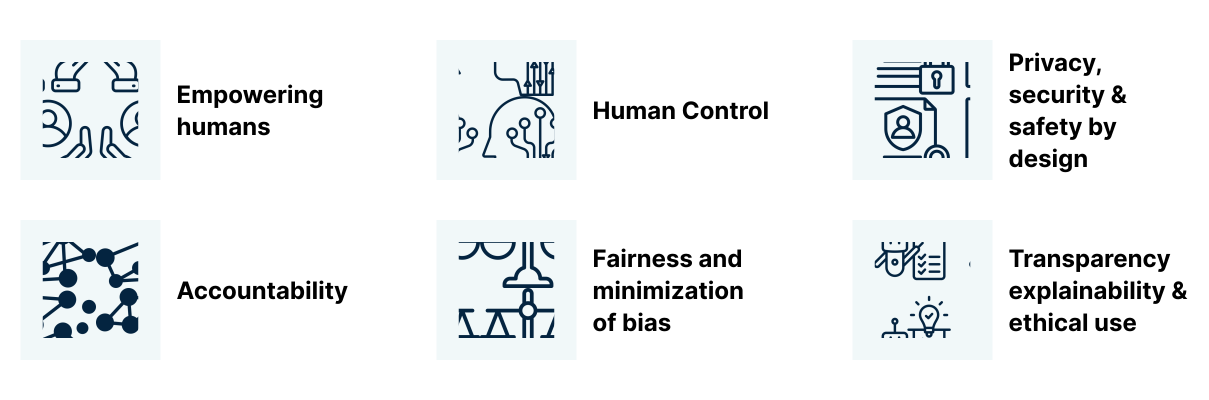
Consequences of unethical AI
The far-reaching and complex ramifications of unethical AI extend into all corners of society. In this age dominated by AI, it's crucial to place ethical concerns at the forefront, encourage transparency, and cultivate cooperation among all involved parties. This collaborative effort is essential for minimizing risks and ensuring that AI benefits humanity. By adhering to ethical standards, we can effectively harness AI's potential for positive change while guarding against its negative outcomes.
 In our rapidly evolving technological landscape, artificial intelligence (AI) holds immense promise, from revolutionizing industries to enhancing everyday experiences. However, this transformative power comes with a caveat: the potential for unethical use and its consequential fallout. As AI permeates various facets of society, the repercussions of unethical AI practices become increasingly apparent. Here, we delve into the profound consequences of unethical AI:
- Bias Amplification: AI systems are only as impartial as the data they are trained on. When biased data sets are used, AI can exacerbate societal prejudices, leading to discriminatory outcomes. From biased hiring practices to unfair judicial decisions, the amplification of bias by AI perpetuates systemic inequalities and undermines the quest for fairness and justice.
- Loss of Privacy: Ethical AI respects user privacy and ensures data security. Conversely, unethical AI disregards these principles, jeopardizing individuals' privacy and autonomy. Whether through invasive surveillance technologies or data breaches, the erosion of privacy erodes trust in AI systems and compromises fundamental rights.
- Algorithmic Manipulation: Unethical actors may exploit AI algorithms to manipulate public opinion, deceive consumers, or sway political outcomes. By leveraging AI-driven misinformation campaigns or algorithmic trading strategies, these manipulative practices can sow discord, distort markets, and undermine democratic processes, posing significant threats to societal stability and integrity.
- Safety and Security Risks: From autonomous vehicles to healthcare diagnostics, AI systems have real-world implications for safety-critical applications. Ethical lapses in AI development, such as inadequate testing or malicious tampering, can result in catastrophic failures, endangering lives and undermining public trust in AI-driven technologies.
- Stifled Innovation and Trust Deficit: Ethical concerns surrounding AI can stifle innovation as regulatory scrutiny increases and public trust diminishes. Fears of misuse or unintended consequences may deter investment in AI research and development, hampering progress in tackling pressing societal challenges and realizing the full potential of AI for the common good.
Responsibilities of AI makers
While extensive language models embody sophisticated and advantageous technology, it is imperative to stay alert to the risks associated with their application. The swift evolution of technology, expanding adoption, and the introduction of new tools heighten the potential for novel vulnerabilities. While the OWASP Top 10 list for LLM streamlines threat modeling for LLM-related applications, it is not exhaustive. Sustained vigilance remains crucial for detecting and mitigating emerging vulnerabilities promptly.
The notion of leveraging AI for societal benefit is an emerging area within AI ethics, with the aim of utilizing AI to address global challenges and improve societal and environmental well-being. At the heart of this effort is the creation and implementation of AI systems that benefit society as a whole, rather than just a select few. Fundamental principles of AI for societal benefit include inclusivity, sustainability, and designing technology with a focus on meeting human needs. By prioritizing these principles, AI developers can contribute to the development of a fairer and more sustainable future through technology.
The notion of leveraging AI for societal benefit is an emerging area within AI ethics, with the aim of utilizing AI to address global challenges and improve societal and environmental well-being. At the heart of this effort is the creation and implementation of AI systems that benefit society as a whole, rather than just a select few. Fundamental principles of AI for societal benefit include inclusivity, sustainability, and designing technology with a focus on meeting human needs. By prioritizing these principles, AI developers can contribute to the development of a fairer and more sustainable future through technology.
Strategies to mitigate bias
In AI, bias poses a major hurdle, perpetuating inequalities and eroding trust. Yet, employing targeted strategies can mitigate bias, promoting fair and ethical AI. Here, we delve into effective bias-correcting methods.
- Diverse and Representative Data Collection: The foundation of any AI system lies in its training data. To mitigate bias, it's crucial to ensure that the training data is diverse and representative of the population it aims to serve. This means actively seeking out data from various sources and demographics to prevent underrepresentation or overrepresentation of certain groups.
- Bias Detection and Evaluation: Implementing mechanisms for detecting and evaluating bias within AI systems is essential. This involves thorough testing and analysis to identify potential sources of bias throughout the development lifecycle. By employing techniques such as fairness metrics and algorithm audits, developers can gain insights into the presence and extent of bias in their AI models.
- Transparency and Explainability: Promoting transparency and explainability in AI systems can help mitigate bias by allowing stakeholders to understand how decisions are made. Providing clear explanations of the factors influencing AI outcomes can facilitate accountability and enable users to identify and address bias effectively.
- Regular Monitoring and Maintenance: Bias in AI is not a one-time problem; it requires ongoing monitoring and maintenance to address evolving challenges. Implementing procedures for regular assessment and recalibration of AI models can help prevent bias from creeping in over time and ensure that systems remain fair and equitable.
- Diverse and Inclusive Development Teams: Building diverse and inclusive development teams is crucial for mitigating bias in AI. By bringing together individuals with a range of backgrounds, perspectives, and experiences, teams can uncover and address biases that may go unnoticed by homogeneous groups. Additionally, diverse teams are better equipped to design AI solutions that reflect the needs and values of diverse communities.
- Monitoring model, data, and concept drift over time.
- Ethical Guidelines and Frameworks: Adhering to ethical guidelines and frameworks can provide a roadmap for developers to navigate the complex ethical considerations surrounding AI. By incorporating principles such as fairness, accountability, and transparency into the development process, organizations can proactively mitigate bias and ensure that AI systems align with ethical standards.
- User Feedback and Iterative Improvement: Engaging users in the feedback loop is essential for identifying and addressing bias in AI systems. By soliciting feedback from diverse stakeholders and incorporating their perspectives into the development process, organizations can iteratively improve the fairness and inclusivity of their AI solutions.
As generative AI technology becomes more influential, it's crucial to highlight ethical concerns to develop solutions that are fair, transparent, and beneficial for all. Those involved in handling data have a special responsibility to develop ethical AI systems, with addressing bias being a key aspect of this responsibility. By focusing on gathering diverse data, carefully preprocessing it, using algorithms that prioritize fairness, and consistently evaluating with fairness metrics, we can reduce bias in AI systems together. Moreover, promoting collaboration with stakeholders, providing education on AI ethics, and implementing transparency and accountability measures will ensure that AI technologies contribute to a future that is equitable and just for everyone.
Recommended Articles

Metricwise: The AI Observability Platform
At Metricwise, we're dedicated to making advanced AI tools accessible to everyone...

What factors should be taken ...
During the configuration of ML monitoring for a specific model, it is crucial to consider the following...
